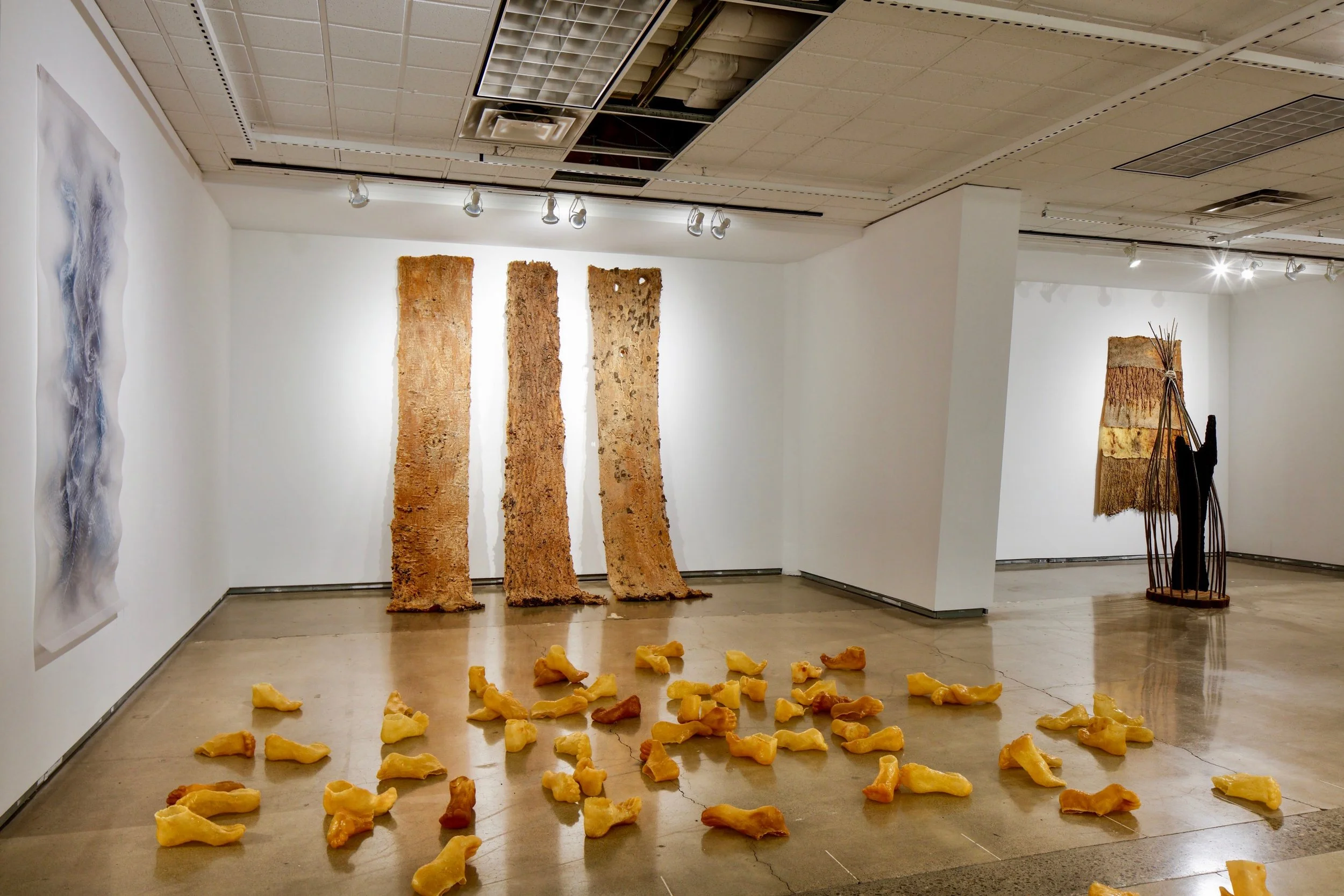
Elegies of Loss, Resilience, and Regeneration Charred redwood, willow, jute, wax, natural latex, reclaimed fishing nets, gypsum, soil, sound, and video
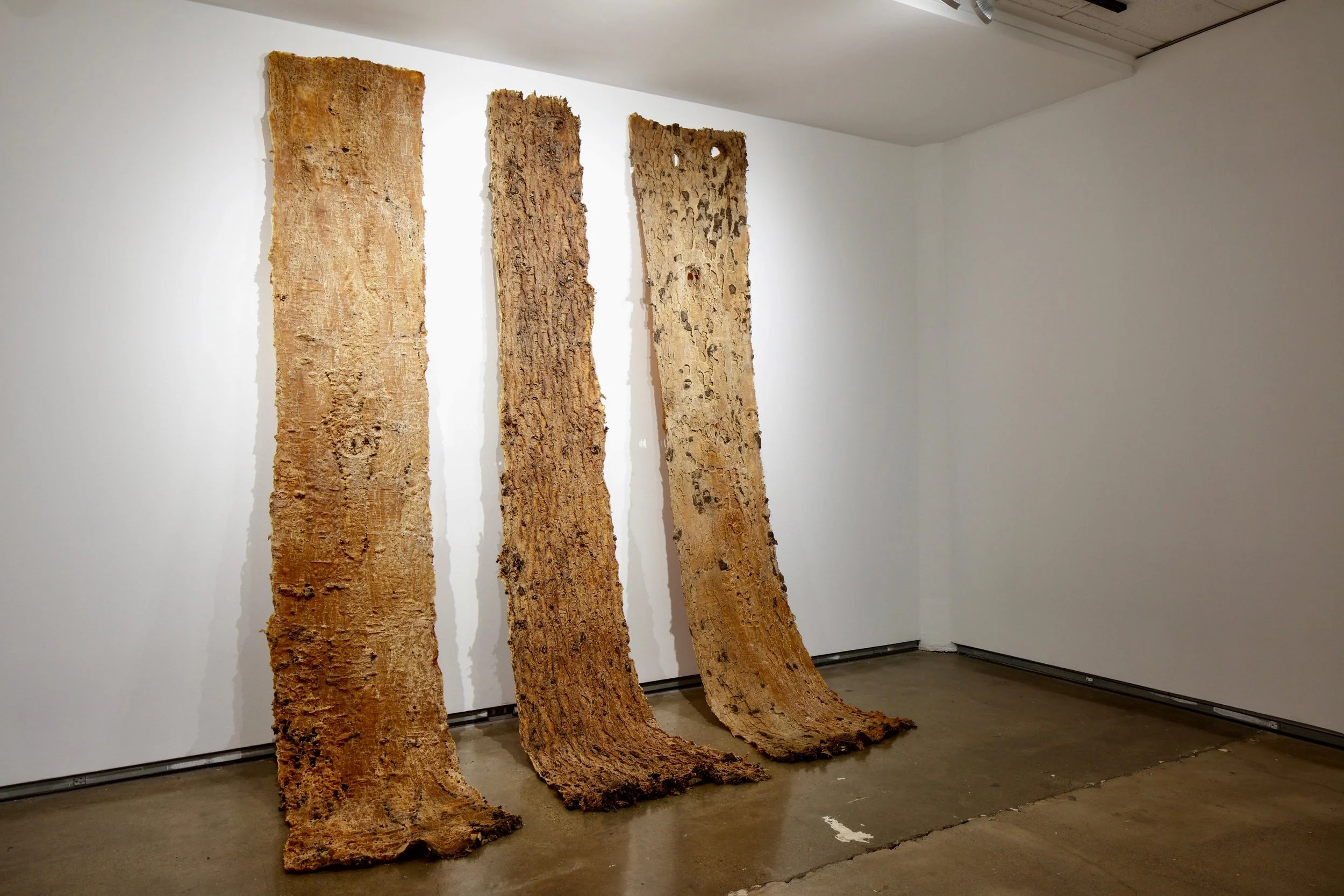
Skins, natural latex, 120" x 82"
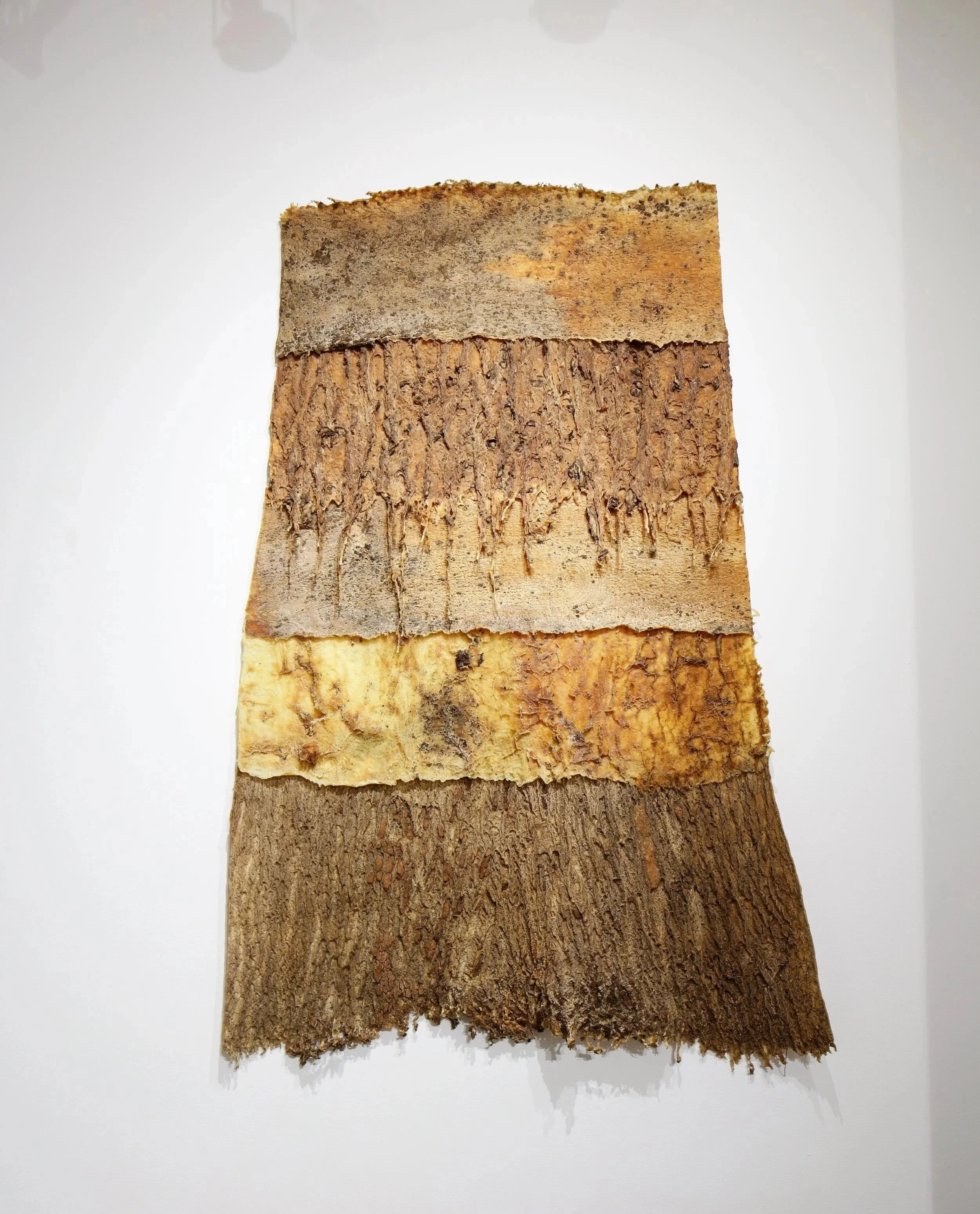
Distressed, natural latex, 66" x 55"
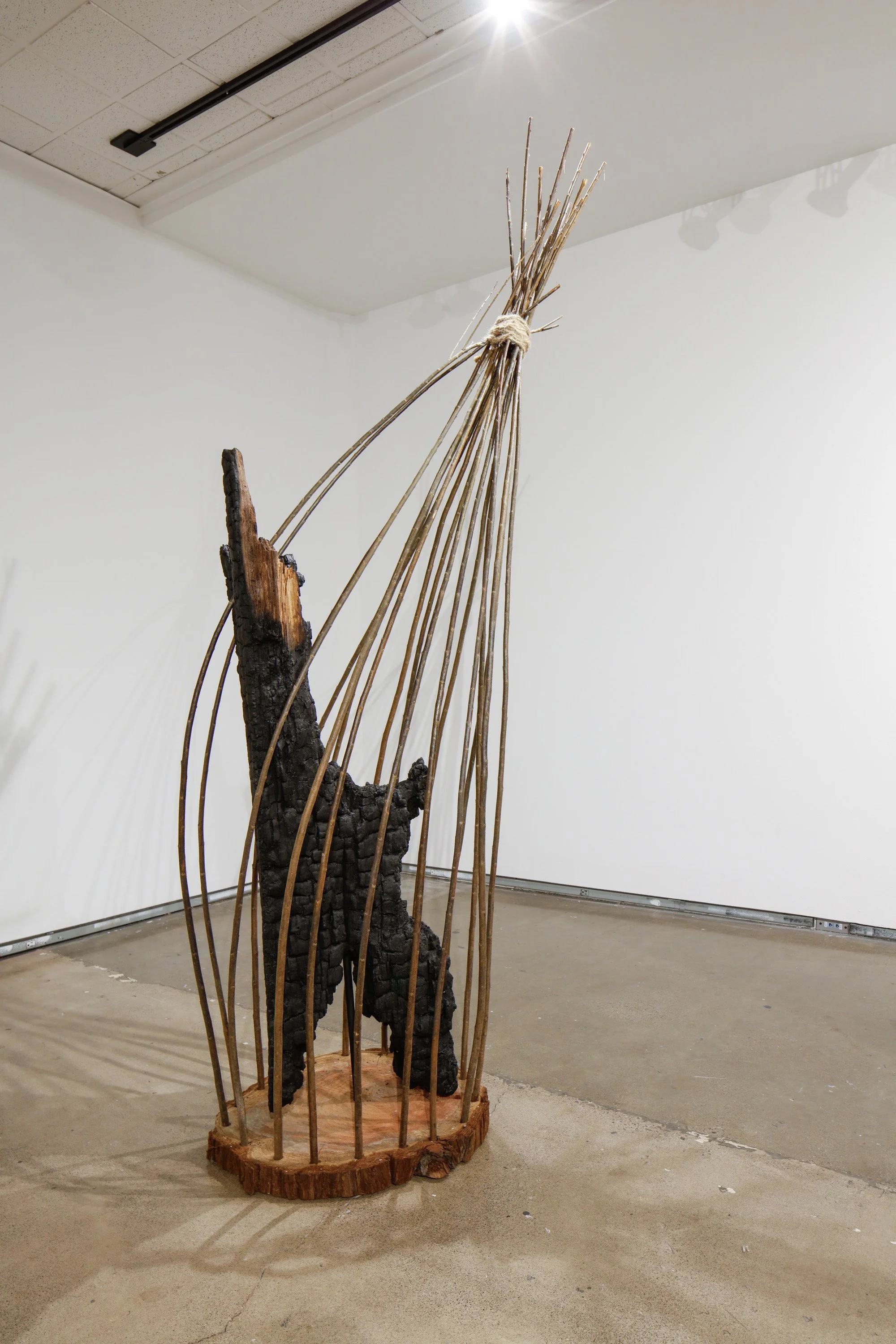
Embrace #1, charred redwood, willow, and jute, 84" × 24"
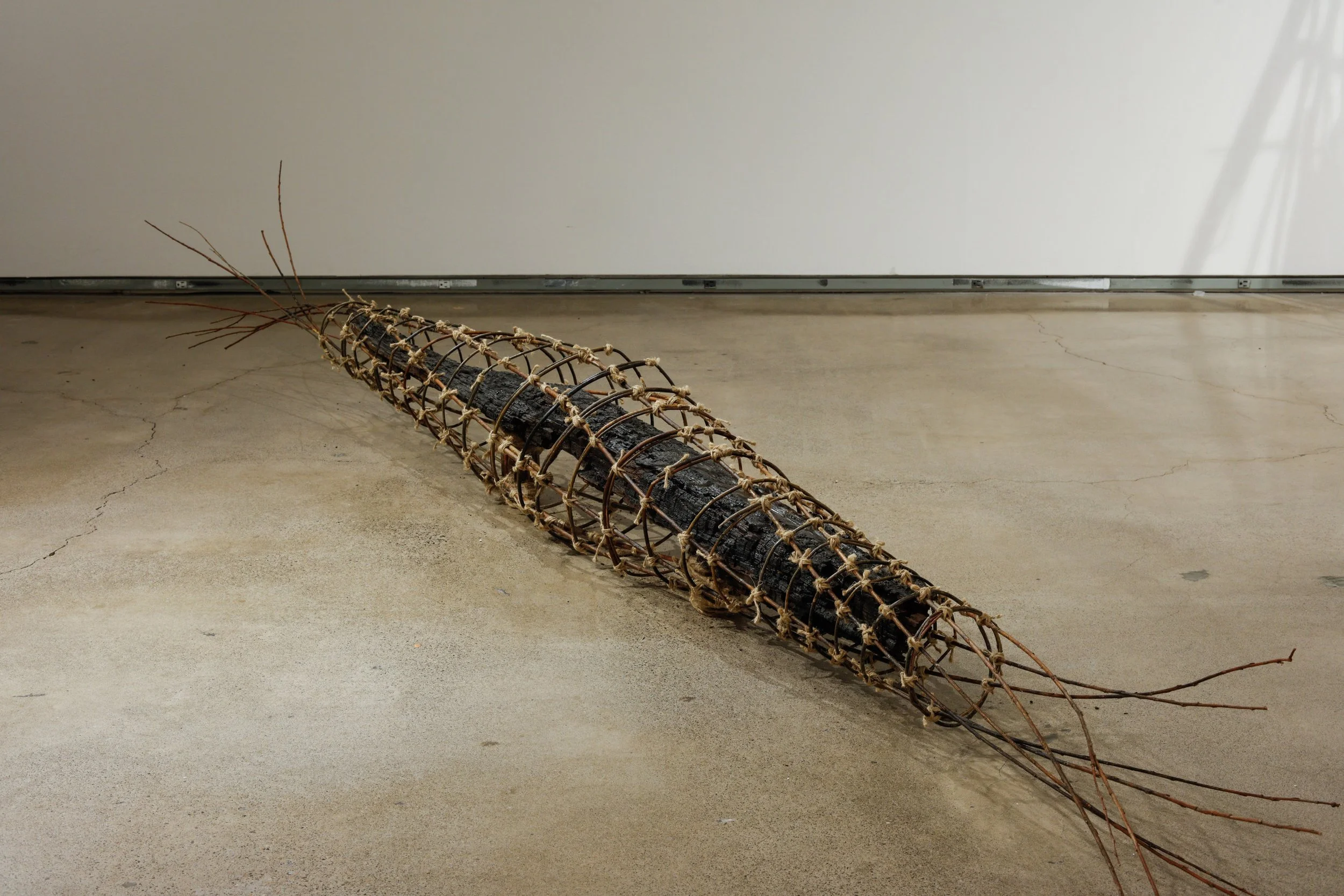
Embrace #2, charred redwood, willow, and jute, 120" × 10" D
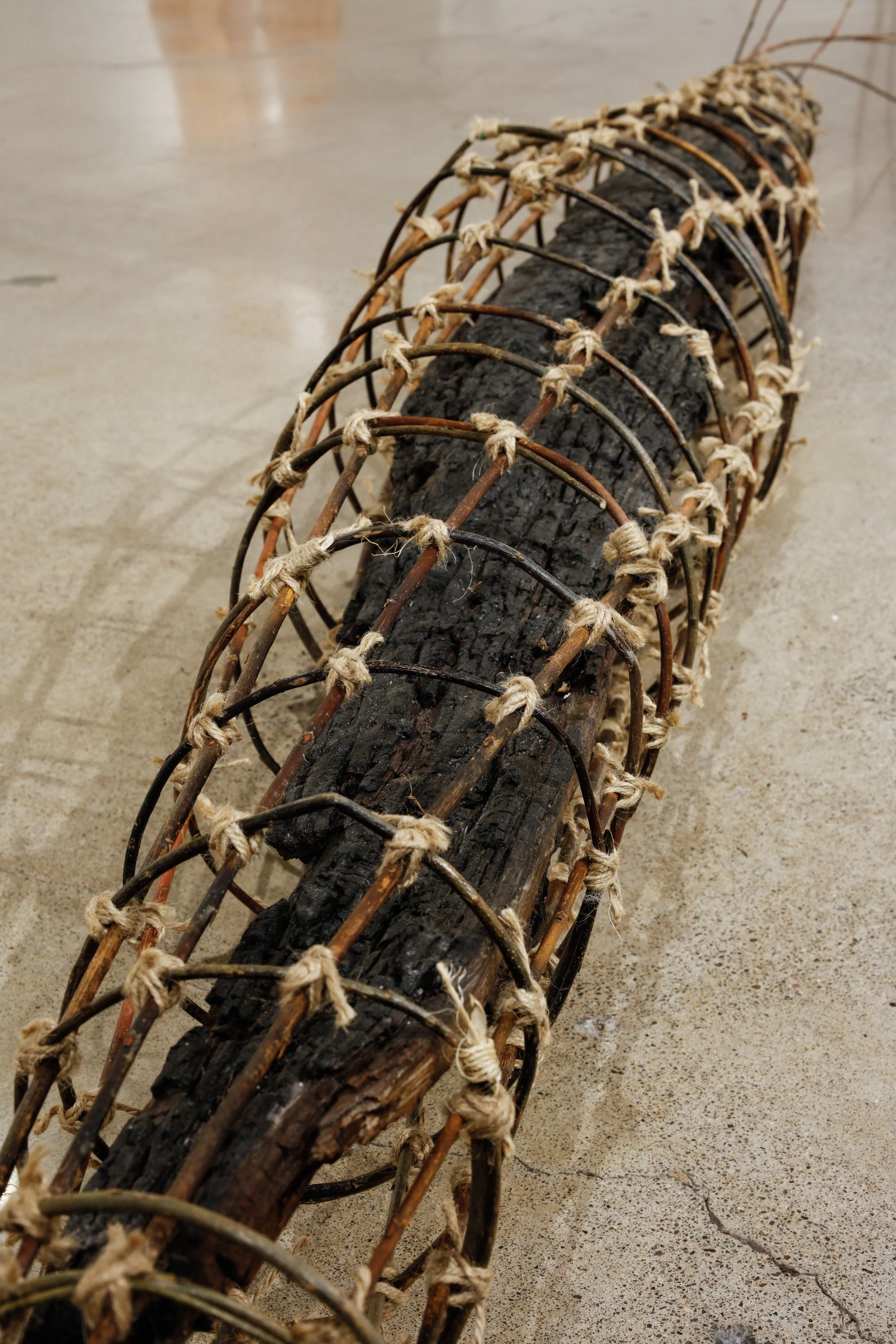
Embrace #2, detail
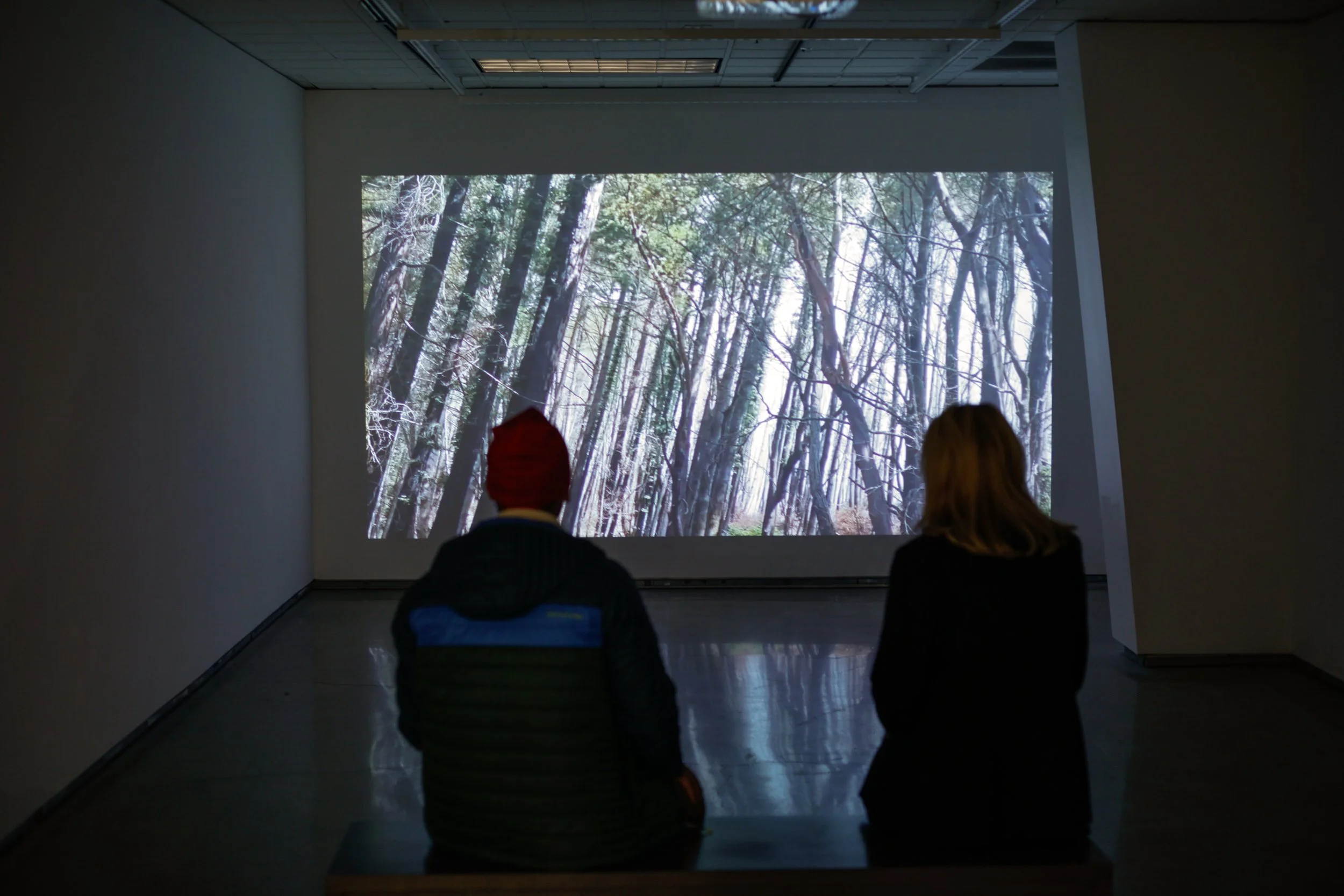
Heartbeat of a Forest, single-channel video
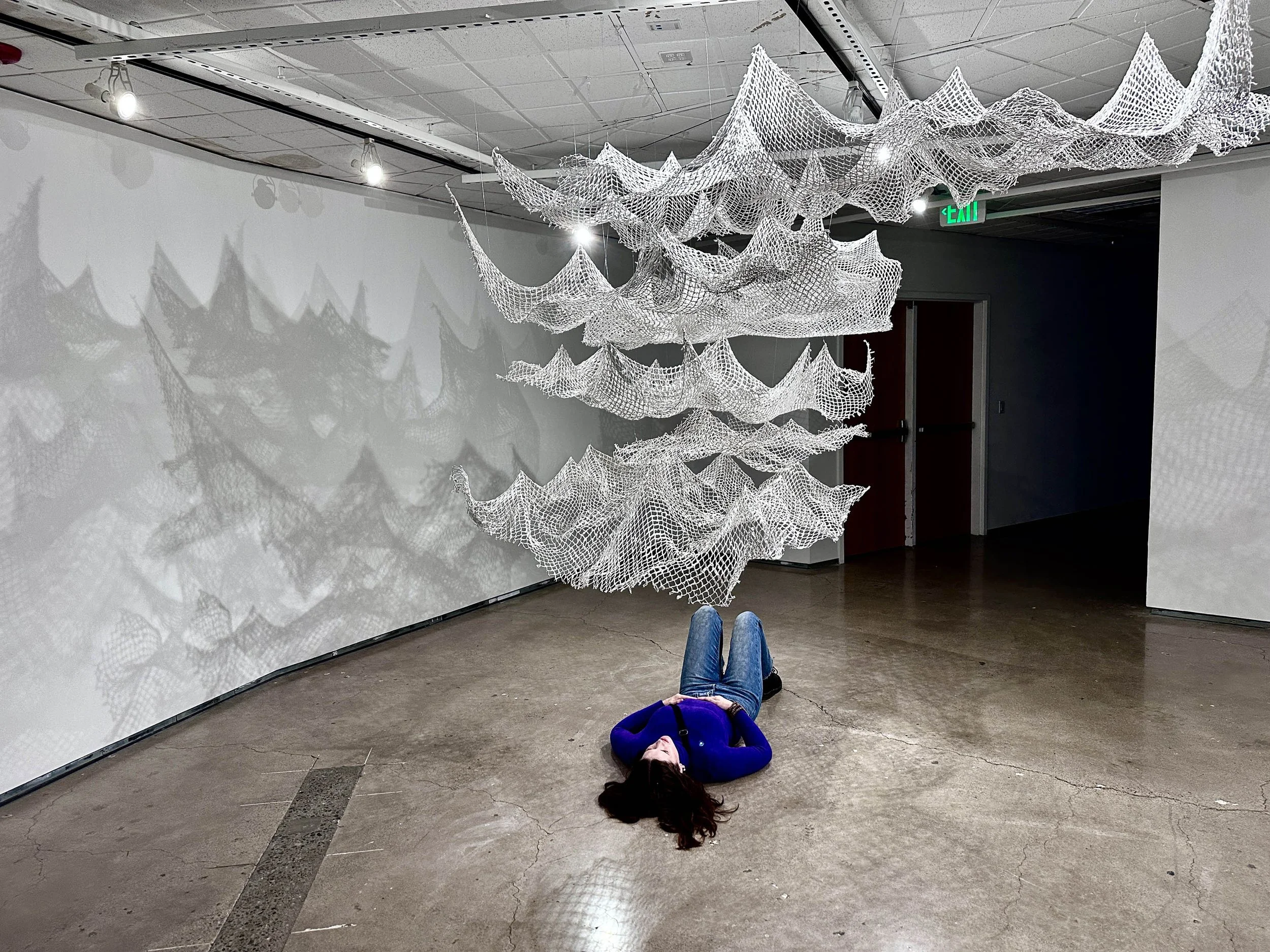
And the Waters Will Come, reclaimed fishing nets and gypsum, dimensions variable
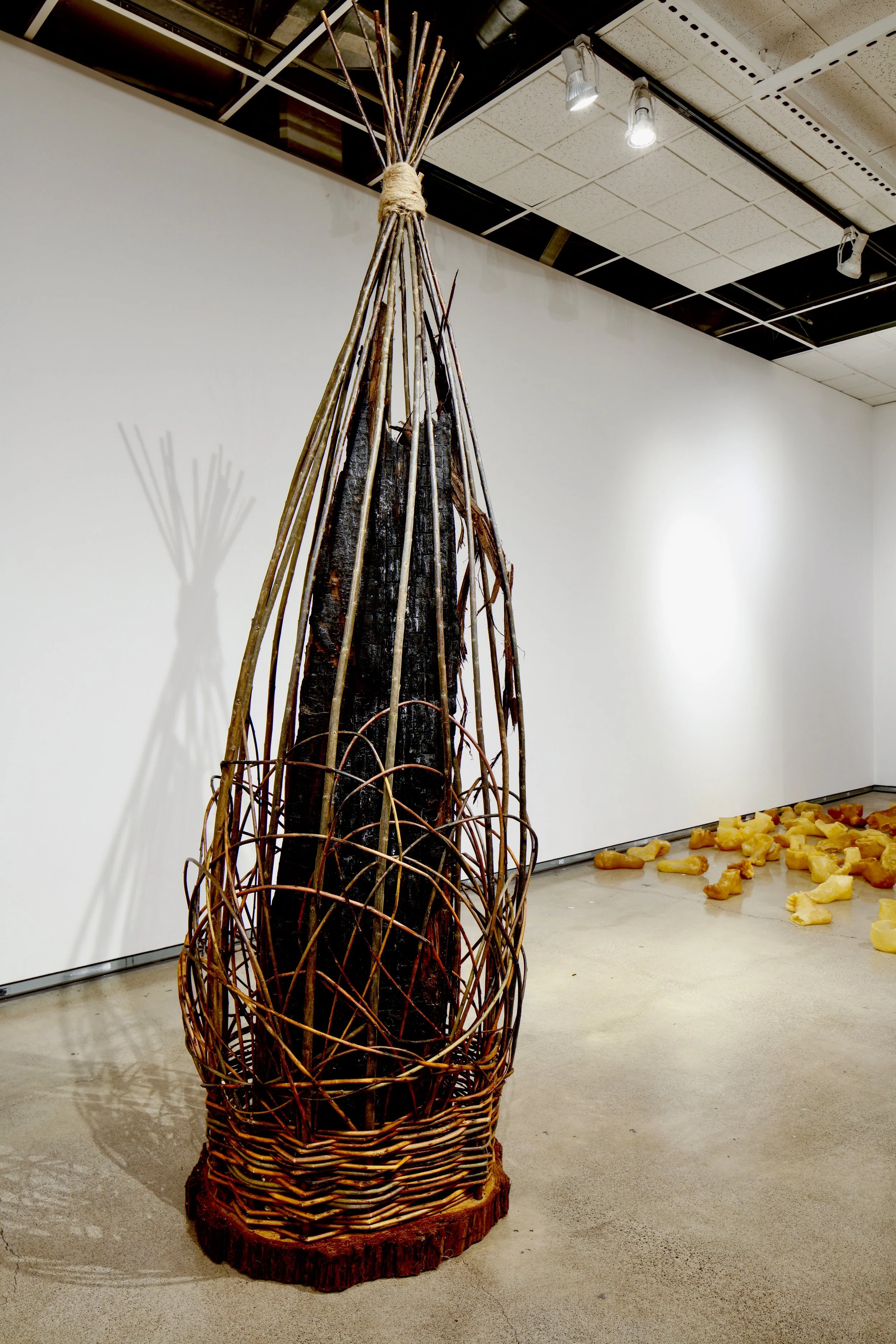
Embrace #3, charred redwood, willow, and jute, 84”x24”
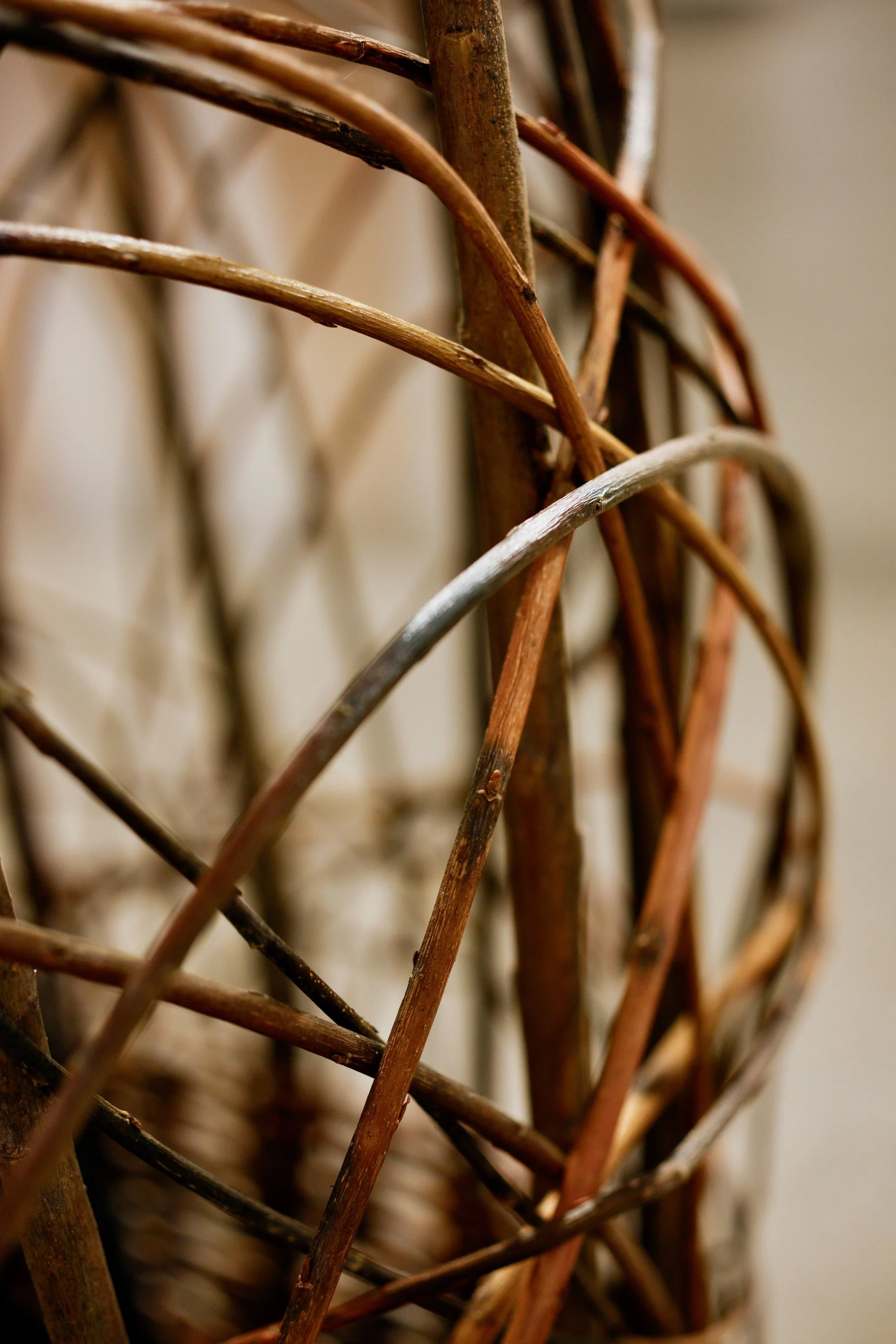
Embrace #3, detail
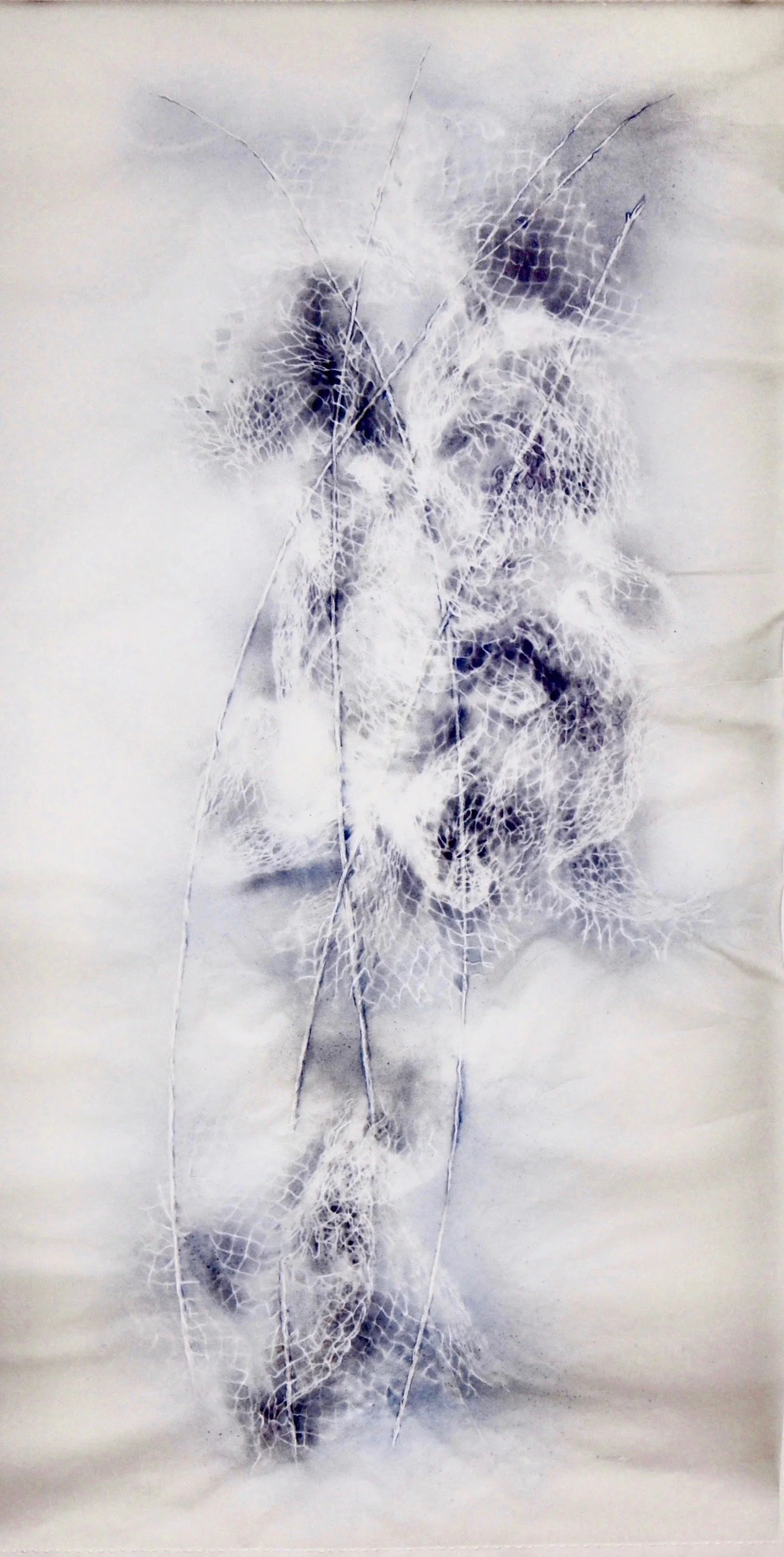
Transient Impressions#1, ink, pastel, on traditional vellum, 3’ x 6’
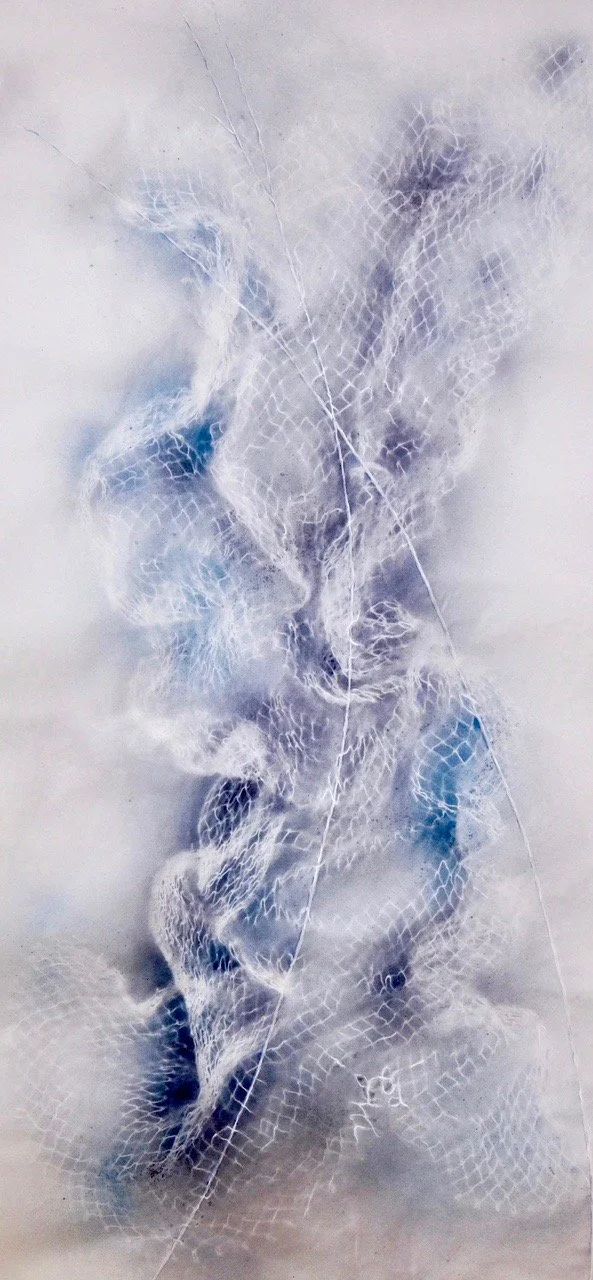
Transient Impressions #2, ink, pastel, on traditional vellum, 3’ x 6’
Heartbeat Of A Forest
Elegies of Loss, Resilience, and Regeneration is an autobiographical body of work that maps a personal journey from water to fire. Sanders was born in Yorkshire, England, in a North Sea fishing town shaped by flooding, migration, and economic decline. As the fishing industry collapsed, her family left the United Kingdom in the 1970s, moving across Canada and eventually to California in search of work and stability.
This movement between places marked by environmental and economic instability continues to shape Sanders’ practice. Having grown up with flooding and later lived in California through drought and catastrophic wildfire, she understands climate change not as an abstraction, but as something embodied, lived, and carried across generations.
Working with salvaged, gathered, and responsive materials, Sanders creates installations that reflect on loss, vulnerability, care, and regeneration. Charred redwood, willow, natural latex, gypsum, and reclaimed fishing nets become more than materials; they become witnesses to ecological change. Through casting, wrapping, gathering, and acts of physical repair, Sanders considers the fragile relationships that connect human bodies, natural systems, and the more-than-human world.
In Embrace #1, Embrace #2, and Embrace #3, seven-foot charred redwood forms stand upright, encircled by willow. Sourced from California forests damaged by wildfire, the blackened forms carry the memory of destruction, while the willow suggests resilience, protection, and renewal. The work holds these forces in tension, asking how care might exist in the aftermath of devastation.
In Skins, Sanders uses natural latex to capture impressions of tree bark, forming skin-like surfaces that hold indexical traces of touch, time, and place. Each casting begins as a direct encounter with a living tree, preserving the marks, wounds, and textures of its surface. As the latex darkens, hardens, and changes over time, the material itself becomes a record of transformation and impermanence.
Used fishing nets appear as remnants of human industry and entanglement. Once tools of extraction, they are transformed into fragile, suspended forms that evoke water, labor, depletion, and the unstable systems that bind human survival to ecological harm. Their presence connects Sanders’ early memories of a collapsing fishing economy with broader questions of environmental loss and responsibility.
Throughout the body of work, Sanders reflects on the fragile equilibrium that underpins our shared existence. Her work does not offer resolution, but instead holds space for grief, endurance, and transformation. Moving between personal memory and ecological crisis, Elegies of Loss, Resilience, and Regeneration asks what it means to live within damaged systems while still seeking connection, care, and the possibility of renewal.